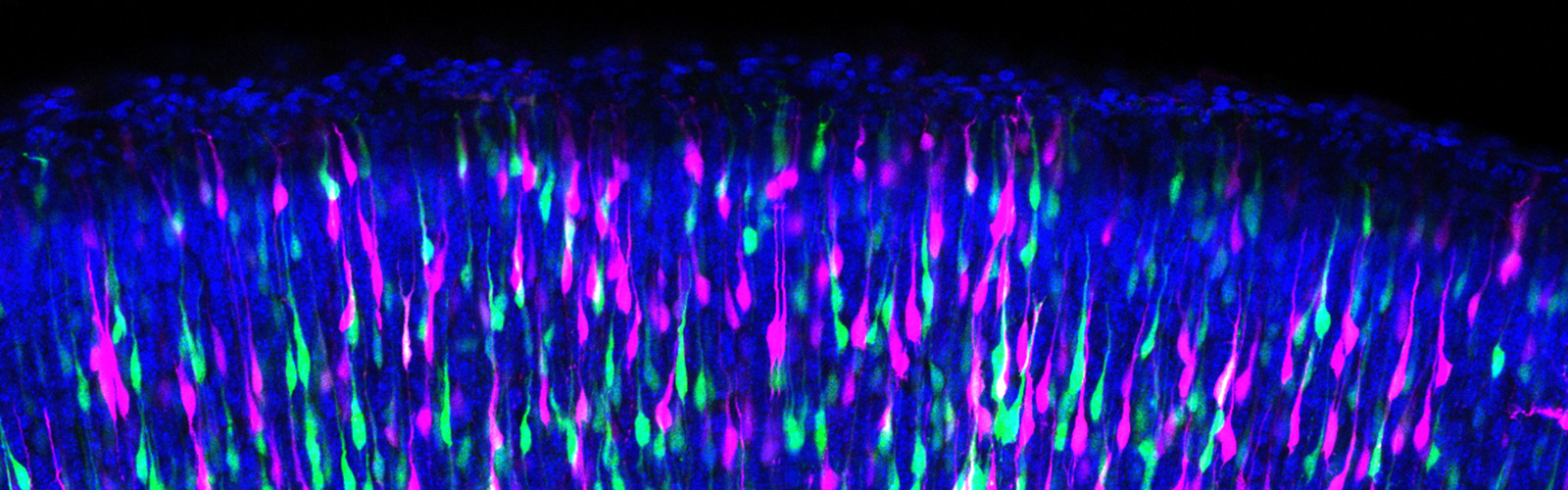
Dent Lab Homepage
We are focused on how the cytoskeletal elements of neurons, actin filaments and microtubules, function in important processes during neuronal development and synaptic plasticity
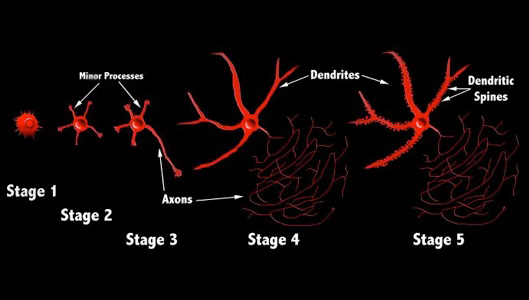
The nervous system is a fantastically complex organization of neurons and non-neuronal cells that allows organisms to sense the environment, initiate movement and produce consciousness. We are interested in understanding how the nervous system develops and functions, specifically the central nervous system (CNS) (i.e. the brain and spinal cord). Two regions of the brain that we focus on are the cortex and hippocampus. When plated in culture, these neurons undergo a stereotyped developmental pattern (see figure). From a spherical cell body neurons first extend lamellipodia and filopodia. This is termed stage 1 of hippocampal/cortical development. Neurons then extend minor processes (stage 2) that will eventually develop into dendrites (stage 4). In stage 3, one minor process begins to extend rapidly to become the axon. In stage 4 the other minor processes elongate and thicken to become dendrites. The dendrites then mature to produce filopodia and dendritic spines (stage 5). Our interest lies in understanding how the underlying structure of the neuron forms and functions.
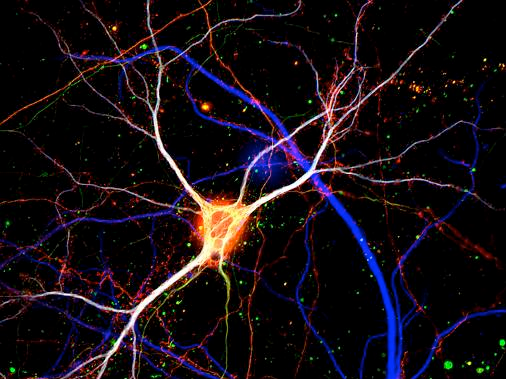
Although we use molecular, genetic, biochemical and immunocytochemical methods, we focus on exploiting high-resolution, live-cell imaging of neurons. All cells in the body constantly undergo dynamic changes in shape and require rapid changes in their entire array of proteins, lipids and nucleic acids. Neurons are somewhat unique in that they often form very polarized structures, with both highly arborized dendrites and a long axon that undergo extensive branching and arborization.
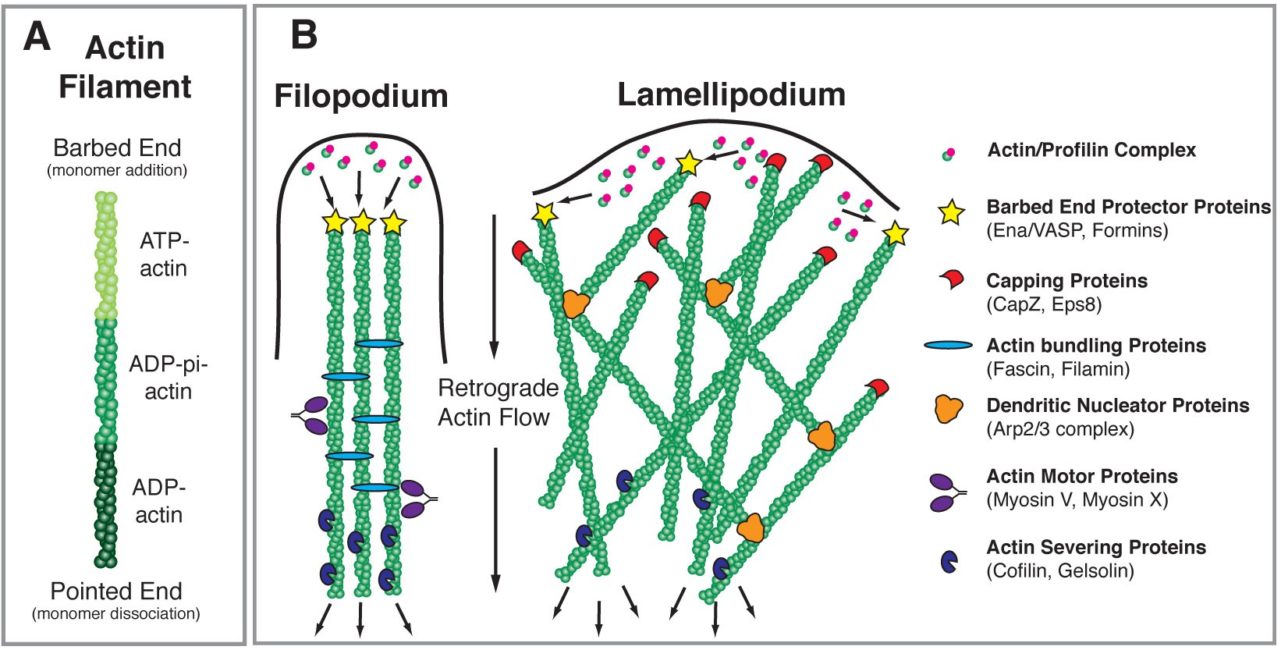
Our focus is on understanding how the cytoskeleton of neurons functions during outgrowth and plasticity. Specifically, we concentrate our studies on the microtubule and actin cytoskeleton, which assemble into tubules and filaments, respectively, by polymerizing from dimers of tubulin or monomers of actin. There are also a plethora of actin- and microtubule-associated proteins that function with actin filaments and microtubules. We are especially interested in the intersection of actin and microtubule interactions and the proteins that allow these two important polymers to guide neuronal migration and axon/dendrite outgrowth and plasticity (see figures below).
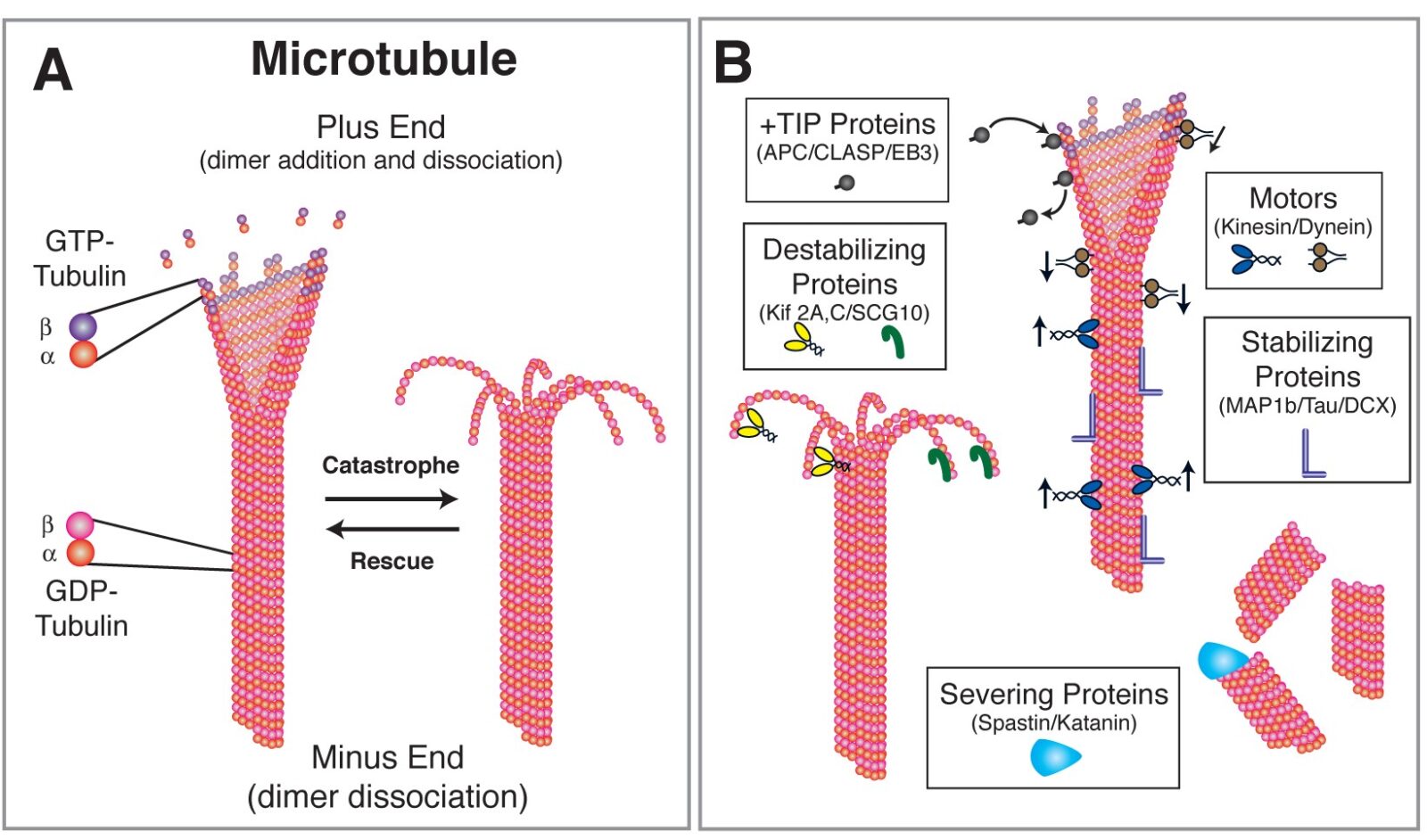
Research
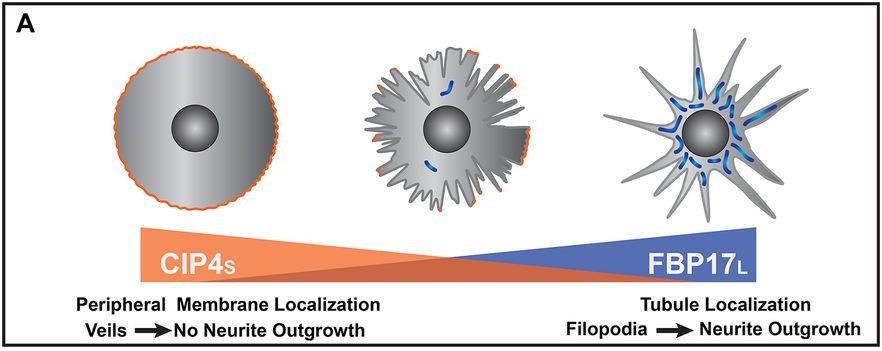
Neuritogenesis
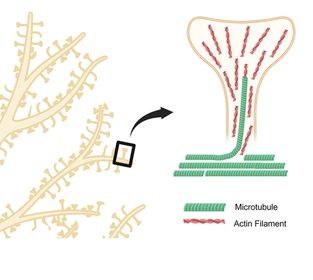
Spine Plasticity
Determine the function of membrane-binding proteins in cortical neuron migration and process outgrowth
Determine how dynamic microtubules regulate dendritic spine structure and function
Contact us
1111 Highland Avenue
Madison, WI 53705
Email: ewdent@wisc.edu
Phone: (608) 262-4672